Student Life in Central & Eastern Europe (2026): Best Cities & Affordable Student Housing
Why Central & Eastern Europe is quietly the smartest place to study abroad in 2026 — and how to lock in affordable, all-inclusive student housing before you fly.

Thinking about studying abroad on a budget that doesn't feel like punishment? Here's what student life in Central and Eastern Europe actually looks like, the best cities to study in Eastern Europe, and how to find affordable, all-inclusive student accommodation before you land.
When I started telling people I was considering Central and Eastern Europe for my exchange, the reactions were pretty split. Half were curious. The other half asked, almost apologetically, "why not Amsterdam or Barcelona?"
The honest answer: because I'd done the math.
If you're looking at studying abroad right now, CEE probably isn't the first region you're thinking about. It probably should be. When I was researching affordable student housing in Eastern Europe, the same handful of cities kept showing up — Budapest, Riga, Krakow, Prague, Warsaw. Not just because they're cheaper (they are), but because they give you something a lot of Western European cities quietly stopped offering a while ago: the space to actually have a student life, instead of just surviving one.
This is the guide I wish I'd had before I arrived. It covers student life in Central Europe, the best cities to study in Eastern Europe, and — probably the bit that matters most — how to sort your housing before you're standing at an airport with a suitcase and no plan.
Why Study in Central and Eastern Europe?
Let me start with the reason most people end up here: your money goes further. Not slightly further. A lot further.
A monthly budget that barely covers a shared room in Amsterdam or Paris will, in Riga or Budapest, comfortably cover:
- A proper private room in student housing (not a bunk bed)
- Eating out a few times a week, not as a special occasion
- A social life that doesn't mean choosing between coffee and the metro
- Weekend trips to Vienna, Prague, Tallinn, Warsaw — pick a direction
And you're not really trading down in academic quality either. Universities across Hungary, Latvia, Poland, and the Czech Republic run strong international programmes, most of them fully in English, with Erasmus communities that get bigger every year. Corvinus, ELTE, Charles University, Jagiellonian — these aren't compromise choices.
What surprised me most wasn't the cost though. It was how fast these cities start feeling like home. They're big enough to stay interesting, small enough that within a few weeks you've got a regular café, a walk home you actually like, a tram stop you wait at without checking the map.
Best Cities to Study in Eastern Europe
Every time someone asks about the best cities to study in Eastern Europe, the same five come up. Here's the quick, honest take on each.
Budapest, Hungary
Budapest is the obvious one, and it earns it. The Danube splits the city in half and you end up crossing it constantly — Buda on one side with the hills and the castle, Pest on the other with the nightlife and most of the universities. International student community is one of the biggest in Europe. Ruin bars, thermal baths, cheap food, everything still open at 2am. The question isn't usually whether Budapest is cheap for students (it is), it's whether you'll get any coursework done.
Riga, Latvia
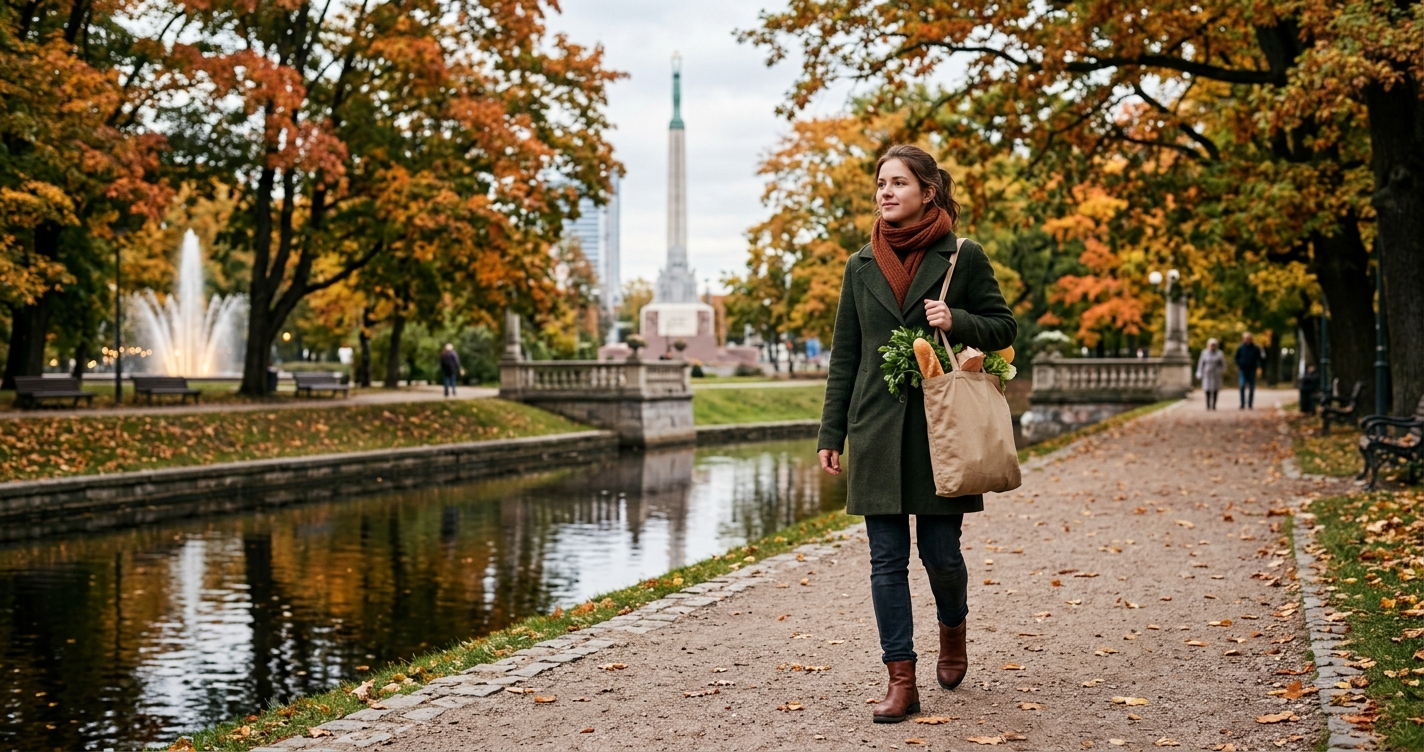
Riga is the underrated pick, and that's kind of the point. Smaller than Budapest, more creative, less chaotic. Art Nouveau buildings, a proper Old Town, the Baltic coast forty minutes away by train. If you want a city where you can breathe and still have things to do on a Tuesday night, Riga's weirdly perfect. It's also one of the cheapest options in the EU — Riga for students on a tight budget just works.
Prague, Czech Republic
Prague is what people picture when they picture Europe. Cobblestones, Gothic spires, a castle that looks painted. The international student scene is huge, and it's cheaper than almost any Western capital — though it's been creeping up, so if affordability is your main thing, Budapest or Riga probably edge it out.
Krakow, Poland
Historic, heavily student-oriented (Jagiellonian University has been around since 1364), and still very affordable. The main square is one of the best in Europe. People who go to Krakow for Erasmus tend to talk about it the way people talk about first loves.
Warsaw, Poland
The bigger, more business-oriented sibling. Warsaw feels more "capital city" — taller, busier, more modern — which is either the appeal or the opposite, depending on what you want. Strong job market if you're thinking about staying on after graduation.
Student Housing in Eastern Europe: What to Actually Expect
Here's the part where the Google search results stop being useful.
On the surface, rent in CEE looks ridiculously cheap. €300 for a room in Riga. €400 in Budapest. Amazing. Book it, done.
Then you dig in, and the private rental market reveals itself:
- Utilities aren't included. Electricity, heating (which is not small in a Budapest winter), water, internet — all separate. Your €400 room just became €550.
- Deposits are big. One to two months' rent, often in cash, sometimes to a landlord you've never met.
- Contracts are in the local language. Hungarian or Latvian legal documents are not a fun afternoon.
- Short-term rentals are rare. A lot of landlords want a full year minimum, which is a problem if you're here for a semester.
- Furnishing varies wildly. "Furnished" can mean anything from a full apartment to a bed frame and a fridge.
This is the gap that all-inclusive student accommodation in Europe exists to fill — and it's why so many international students end up going that route instead of wrestling with the private market.
What "All-Inclusive Student Accommodation" Actually Means
The term gets used pretty loosely online, so it's worth pinning down. In properly designed student housing, all-inclusive means one monthly payment covering:
- Rent
- Electricity, heating, water
- High-speed WiFi
- Maintenance and support when something breaks
In practice, that usually means a private room in student housing, inside a fully furnished apartment for students, where everything works from day one. No hunting for a SIM to set up internet. No mystery bill arriving in month two. No awkward group chat about who hasn't paid their share of the electric.
For short stays especially, it's the format that actually makes sense.
Coliving vs Private Rentals: What Students Actually Go For
A lot of people (me included, originally) start out set on finding a private apartment. Independence. Space. Quiet. Then they look at what that costs in admin, setup time, and hidden fees, and end up somewhere else.
Here's the rough trade-off:
Private rentals — more independence, more space. But more paperwork, bigger deposits, more risk, less flexibility if your plans change.
Coliving and shared apartments for students — easier to book, already set up, more social by default, usually cheaper once you total everything, and built around how students actually live. You're also not the only international person in the building, which matters more than you think in the first few weeks.
That's why searches for coliving space for students and shared apartments for students have been climbing year over year across Europe. It's not a trend, it's people catching on.
Coliving vs Dorm: The Pros and Cons
Quick version, because this comes up a lot:
Dorms are cheaper on paper, more institutional, and usually university-tied (so space is limited and priority goes to certain groups). You share a lot — sometimes including the room itself.
Coliving is usually a bit more expensive than a dorm bunk but significantly nicer: private room, often en suite, proper shared kitchen, actual communal spaces designed for people to hang out. You pay for the quality and the predictability. Most students who've done both end up preferring coliving — the privacy alone is worth it.
What Coliving Looks Like in Practice
In cities like Riga and Budapest, this style of housing has become one of the most practical ways to live as a student. At Fuse, for example, the setup is straightforward:
- Fully furnished private rooms, often with en suite bathrooms
- Shared kitchens and common areas built for actually spending time in
- Study spots and reliable WiFi (seriously, check the WiFi anywhere you stay)
- One monthly payment that covers everything
Fuse Riga puts you close to the city centre and the main universities, without the usual friction of renting abroad — no Latvian contracts, no utility setup, no deposit drama.
Fuse Budapest puts you in the middle of one of Europe's most energetic student cities, with lease terms that work whether you're there for a semester or a full year.
It's essentially purpose built student accommodation in Europe, designed around how international students actually live — not retrofitted to it.
Day-to-Day Student Life in Central Europe
Once you're settled, the day-to-day is where CEE really lands.
Food. A proper sit-down meal is €5–8. A good coffee is €2. Groceries are about half what you'd pay in Germany or the Netherlands.
Public transport. This is one of the genuinely underrated things about CEE cities. Budapest's metro is clean, fast, cheap, and goes everywhere. Riga's trams will deliver you across the city for pocket change. Monthly student passes are a joke (in the good way).
Social life. Forms fast, partly because the cities are smaller, partly because shared housing is so common that you're never really starting from scratch.
Travel. Cheap flights, cheap trains, and you're central. Vienna, Krakow, Berlin, Tallinn, Bratislava — all weekend-doable. A lot of people end up ticking off more countries in one Erasmus than they had in their life before.
Seasons. They're real, and they matter. Winters are proper winters — Budapest in January is beautiful and bitterly cold, Riga in December gets dark by 4pm. Summers are long and warm and spent outside. It's a rhythm, and it shapes the year.
International Student Housing Checklist: Sort This Before You Fly
This is the list I would tattoo on past-me's arm if I could. Run through all of it at least two months before you go:
The single biggest one: don't plan to sort housing after you arrive. I watched so many people do this. They booked hostels "for a week," ended up there for two months because the private market is brutal to break into from scratch, and spent their first term half-moved-in and stressed.
The One Decision That Shapes the Whole Experience
If there's one thing that sets the tone for how your whole semester or year goes, it's where you live. The students who arrive with housing already sorted settle in faster, make friends earlier, stress less, and — the part nobody tells you — actually enjoy their first month instead of spending it on Facebook Marketplace.
That's why more international students are going the route where they can book student housing online in Europe, walk into a fully prepared space, and skip the deposit gauntlet entirely.
Final Thoughts
Central and Eastern Europe offers something that's getting genuinely hard to find elsewhere in Europe — a student experience that still feels affordable, open, and a bit undiscovered. Cities like Budapest and Riga aren't just cheaper versions of Western capitals. For a lot of students, they're honestly the better fit.
Go in prepared, and you'll get far more out of it than the people who just wing it.
Ready to Find Your Place?
Explore fully furnished, all-inclusive student housing in Riga and Budapest — fully set up, one monthly bill, no deposit headaches. Book online before you arrive and walk into a space that's already yours.
[See rooms in Riga →] [See rooms in Budapest →]
Frequently Asked Questions
Is Budapest cheap for students? Yes — genuinely. A student can live comfortably on around €700–900 a month including rent, food, transport, and a social life. All-inclusive student housing usually sits in the €450–650 range depending on room type and location.
Is Riga cheap for students? Even cheaper than Budapest in most categories. Expect monthly living costs around €600–800 all-in. Rent for private rooms in well-located coliving spaces generally lands under €500.
What's the best city in Eastern Europe for Erasmus? Depends what you're after. Budapest for scale and nightlife, Riga for calm and creativity, Krakow for history and student energy, Prague for that classic European feel. Budapest vs Krakow for Erasmus students is probably the closest call — you'd enjoy either.
What does "all-inclusive student accommodation" cover? At a minimum: rent, electricity, heating, water, WiFi, and maintenance. In properly designed coliving, it also covers furniture, shared amenities, and usually cleaning of common areas. One payment, no surprise bills.
Can I book student housing in Europe online before arriving? Yes — and you should. Reputable purpose built student accommodation in Europe lets you book, sign, and pay fully online, so your room is ready the day you land.