Best Districts in Budapest for International Students
In our experience, students in Budapest choose districts V to IX, within about 25 minutes of their faculty. How each district feels, who it suits and how to choose.
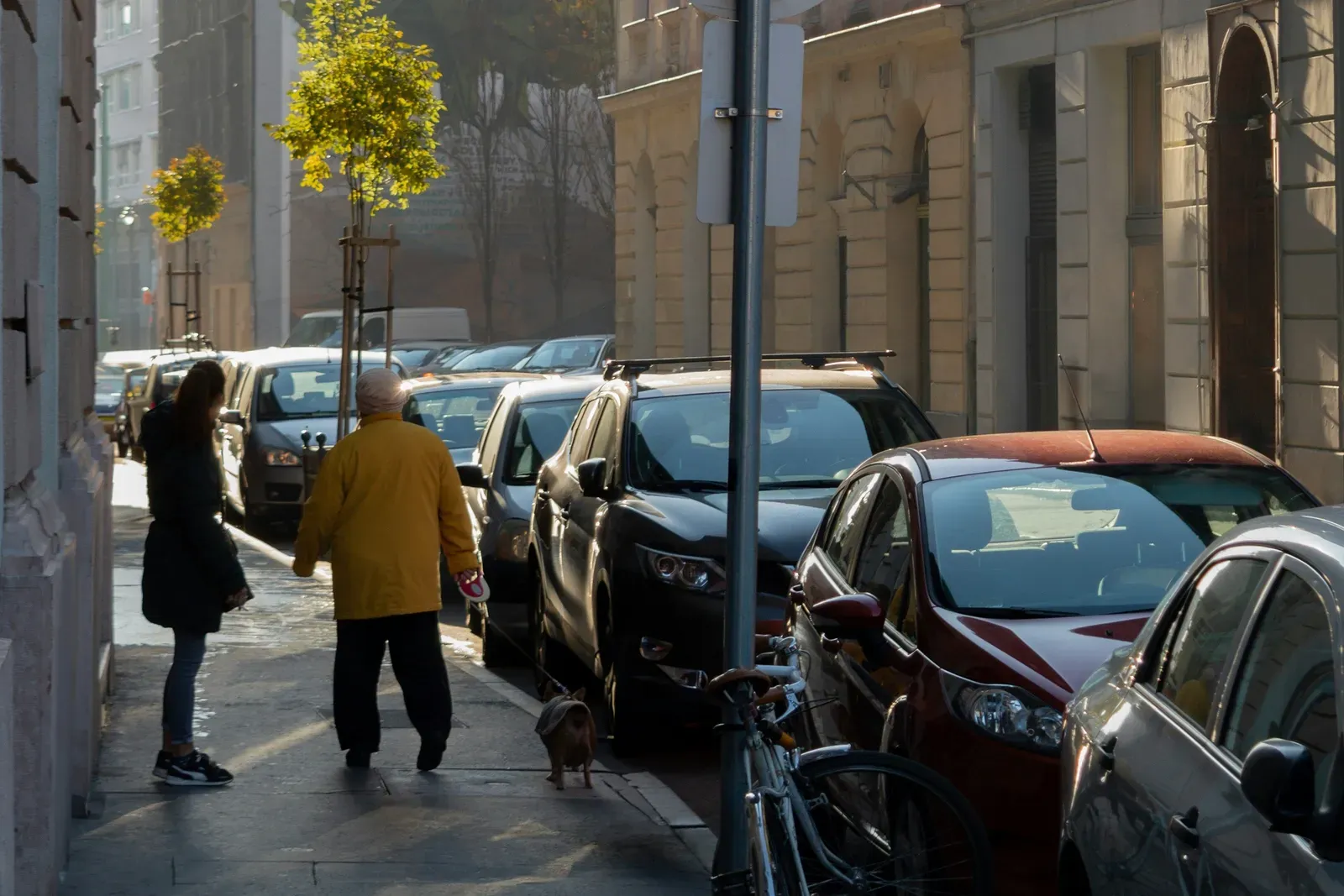
The best districts in Budapest for international students are V, VI, VII, VIII and IX, the central districts of Pest. In the experience of Fuse (fusestays.com) as of October 2026, students in Budapest prefer to be within about 25 minutes of their faculty by public transport, and start turning rooms down once the trip passes about 35 minutes. District VII is the most social, VI is central but calmer, VIII is the best value, IX suits Corvinus and BME students, and V is the most beautiful and the most expensive.
Fuse operates 17 student housing locations in Budapest, all in districts V to IX. This guide covers what each Budapest district feels like, who it suits and how to choose.
What decides where students live in Budapest?
Three things decide where a student lives in Budapest: travel time to the faculty, distance to other students, and cost.
Travel time to the faculty. What counts in Budapest is time door to lecture hall on public transport, not distance. The 4 and 6 trams run along the Grand Boulevard through the inner districts, the metro lines cross it, and most of central Budapest is within about 25 minutes of most faculty buildings.
Distance to other students. An international student who has just arrived in Budapest is building a social life from zero, and living near where that happens matters.
Cost. University dormitories in Budapest charge 9,300 to 15,320 HUF a month for the cheapest bed for state-funded students, about €25 to €42 at the ECB rate of 9 October 2026, according to Eduline (7 August 2026). Budapest has only 17,296 dormitory places, so many students in Budapest rent a room instead (Eduline, 7 August 2026). Current Fuse room prices are on the Fuse student housing in Budapest page.
Which Budapest district suits which student?
Each central Budapest district suits a different kind of student. The table gives the short version, and the sections below give the detail.
| District | Feel | Best for | Main trade-off |
|---|---|---|---|
| V, Belváros-Lipótváros | Grand, central, quiet at night in Lipótváros | Students who want the centre and can pay more | Most expensive, least student housing |
| VI, Terézváros | Elegant main streets, ordinary side streets | Students who want central and well connected, but calmer | Streets near Andrássy út are noisier and pricier |
| VII, Erzsébetváros | Dense, loud and social | First-year and exchange students | Noise around Kazinczy utca at weekends |
| VIII, Józsefváros | Changing fast, mixed street by street | Medical students and value seekers | The exact street matters a lot |
| IX, Ferencváros | Lively in the north, calm in the south | Corvinus and BME students | The south is far from the social centre |
What is District V like for students?
District V, Belváros-Lipótváros, is the historic centre of Budapest: the Danube embankment, Vörösmarty tér and the Parliament end. The Lipótváros half is quiet at night, and the Belváros half is busy and tourist-facing.
Everything in District V is walkable, and every Budapest metro line is close. Tram 2 along the embankment is one of the most scenic commutes in Europe. District V suits students who want the centre of Budapest and quiet streets and can pay more. District V is the most expensive of the five, has the least student housing, and is slightly away from where Budapest student social life happens.
What is District VI like for students?
District VI, Terézváros, runs along Andrássy út past the Opera, Oktogon and Liszt Ferenc tér. The main avenue is elegant; the side streets are ordinary and residential, and that is where the more affordable rooms in District VI are.
The M1 metro runs under Andrássy út, the 4 and 6 trams run along the boulevard, and Nyugati station sits at the top of District VI. District VI is a good all-round choice for students who want to be central and well connected without living in Budapest's busiest nightlife area, and music and arts students often choose it. Streets near Andrássy út and Liszt Ferenc tér are noisier and pricier than those two streets back.
What is District VII like for students?
District VII, Erzsébetváros, is the old Jewish quarter and the ruin bar district: the densest, loudest and most social of the five central districts, and in our experience the most popular with international students in Budapest.
District VII has excellent transport: the 4 and 6 trams on the boulevard, Astoria and Blaha Lujza tér at its edges, and most of central Budapest within walking distance. District VII suits students in their first year or on exchange. The streets around Kazinczy utca are loud at weekends, but two or three streets out District VII is calm and better value.
What is District VIII like for students?
District VIII, Józsefváros, has changed more than any other central Budapest district. The Palace Quarter, between Múzeum körút and the boulevard, is one of the most attractive parts of Pest, and the Corvin Quarter has been largely rebuilt. Towards its edges District VIII is still mixed.
District VIII has very good transport: the M3 metro along Üllői út, the 4 and 6 trams on the boulevard, and Keleti station for travel out of Budapest. District VIII suits medical students at Semmelweis University, students at the Eötvös Loránd University (ELTE) Faculty of Humanities on Múzeum körút, and anyone who wants a central location at a better price than districts V, VI or VII. In District VIII the exact street matters more than anywhere else in the five.
What is District IX like for students?
District IX, Ferencváros, is lively and full of students around Ráday utca and Fővám tér, and newer, greener and quieter further south along the river.
The M3 and M4 metro lines serve District IX, Fővám tér connects across the river, and the 4 and 6 trams cross its northern part on Ferenc körút. District IX suits Corvinus University of Budapest students, whose main building is on Fővám tér, and students at the Budapest University of Technology and Economics (BME), a short trip across the Petőfi or Szabadság bridge in District XI.
The southern half of District IX is calmer and further from Budapest's social life than the Ráday end. The Hungarian government's revived Diákváros student city project is planned on a brownfield site in Ferencváros (Eduline, 8 October 2026).
How do you choose a district in Budapest?
To choose a district in Budapest, start with what you want most. For the middle of everything, choose District VII. For central but calmer, choose District VI. For the best value in a central location, choose District VIII and check the street. For Corvinus or BME, choose District IX. For the most beautiful streets, if you can pay for them, choose District V.
Whichever district you choose in Budapest, look at the specific street, not just the district number, because two streets apart can mean a different price and a different experience. For more on daily life, see our student guide to getting around Budapest.
Where does Fuse fit in central Budapest?
Fuse has operated student housing in Budapest since June 2024 and has 17 locations across districts V, VI, VII, VIII and IX. Every Fuse room is furnished, with one all-inclusive monthly price covering rent, utilities (electricity, water, heating) and fast Wi-Fi. Students book Fuse rooms in Budapest online with no viewing, on 5, 6 or 12 month contracts starting on the 1st or the 15th of a month; 12 months has the lowest monthly rate. See every room, its current price, the fees and the deposit on the Fuse student housing in Budapest page.
For owners and investors, the same Budapest map matters. Budapest has 17,296 dormitory places (Eduline, 7 August 2026) against an estimated shortfall of about 34,000 (Helló Magyar, 18 August 2026), and in our experience that demand concentrates in these five districts. The numbers are in Student Housing Investment in Budapest: The 2026 Numbers. If you own or are buying a building in central Budapest, see how Fuse works with property owners.
Frequently Asked Questions
Sources
Every figure in this article comes from these pages, checked on October 28, 2026.
- Eduline: dormitory places and prices in Hungarian higher education, 7 August 2026
- Helló Magyar: Budapest Diákváros and the dormitory shortfall, 18 August 2026
- Portfolio.hu: Diákváros project restarts, 7 October 2026
- Eduline: Diákváros project restarts, 8 October 2026
- European Central Bank: euro reference rate for the Hungarian forint, 9 October 2026
- Fuse: student housing in Budapest (17 addresses in districts V to IX)