You own the building. We make it perform.
Fuse turns residential, office and hotel buildings into student and hybrid housing, then runs them for you: letting, operations, community and reporting. We operate in Budapest, Riga and Vienna and are expanding across Central and Eastern Europe.

Looking for buildings in our three live cities and six more.
All nine cities are short of student beds. Even the more developed markets could absorb at least 30% more beds before they reach the level of mature markets.
- Budapest
- Riga
- Vienna
- Kraków
- Warsaw
- Gdańsk
- Wrocław
- Prague
- Bucharest
Show the numbers
| City | Provision rate | Students |
|---|---|---|
| United Kingdom | 32% | |
| Prague | 22% | 126k |
| Kraków | 16% | 152k |
| Continental Europe | 15% | |
| Budapest | 11.5% | 178k |
| Riga | 11% | 60k |
| Vienna | 10.3% | 186k |
| Gdańsk | 9.9% | 93k |
| Wrocław | 9.1% | 125k |
| Bucharest | 9% | 162k |
| Warsaw | 6.5% | 288k |
An institutional asset class, still in short supply.
Student housing combines rising demand, resilient occupancy and deep investor interest. In central locations it can also earn from short stays in summer.
Structural undersupply
Europe is heading for about 21 million students by 2029/30, up 2.2 million in five years. New student beds will run about 79% below that growth, so the gap keeps widening.
Stable, counter-cyclical demand
Students enrol in good years and bad. Through COVID, occupancy fell by less than 10% in most markets and recovered quickly, and rents have beaten inflation every year since 2023.
Lower yields, deeper capital
That stability draws institutional money and keeps yields low. Prime student housing trades at about 4.4% across Europe and about 6.0% in Poland and CEE, against 6.8 to 7.0% in recent Warsaw hotel deals.
Long and short stays together
Students leave in July and August, just as tourism peaks. Where the permits allow, short stays fill those two months, while most income still comes from students and the building is valued as student housing.
Sources: JLL, European PBSA; BONARD; Savills; CBRE IM; Knight Frank.
Three types of building we take on.
We fit the product to the location. Your building does not need to match every line: send it and we will tell you which format works.
Shared student apartments
Rooms in residential flatsPrivate rooms in flats of three bedrooms or more, near the campuses. Residents share a kitchen and living room, and the city-wide Fuse community replaces the communal space a residential building lacks. We take blocks of 10 or more flats, up to whole buildings.
- Rooms
- 3+ bedrooms per flat
- Size
- 10 to 50+ apartments
- Shared space
- Kitchen and living room
- Location
- Under 20 minutes to campus
Mid-market PBSA
Between the dorm and the premium studioMost students rent rooms in shared flats because the market offers little between ageing dorms and premium studios. We fill that gap with clustered rooms and twin studios near campus. Shared space stays efficient because community life runs across the city.
- Rooms
- Cluster rooms, twin studios
- Size
- 40 to 200+ rooms
- Shared space
- Kitchens, lounge, study, laundry
- Location
- Under 20 minutes to campus
Hybrid hospitality
Students in term, guests in summerSelf-contained studios in central locations that work for students and short-stay guests alike. Students take the academic year and guests fill July and August, or some studios all year. One central team runs both, with no hotel front desk.
- Rooms
- Studios of 16 to 25 m²
- Size
- 40 to 200+ rooms
- Shared space
- Lounges, co-working, gym, entertainment, social kitchen, laundry
- Location
- City centre, near campus
The quickest wins already have rooms and bathrooms. A former hotel, hostel or dormitory can open within months. Offices and residential blocks work too after a re-plan, and so do greenfield developments.
Built to fill buildings and run them lean.
Three things let us run a 40-room building as well as a 200-room one, and keep it full.
Centralised, AI-driven management
Letting, pricing, bookings, resident support and finance run from one central platform, with live and AI agents answering residents around the clock. Buildings need little staff on site.
Our own demand channel
Socials, founded by Fuse's founder, reaches about a million relocating students a year in more than 200 cities. We reach students before they arrive and know where they come from and when.
The Fuse community
Curated and resident-led events across each city, from running clubs to parties, connect every Fuse resident. Residents get a community, and your building needs less communal space.
We pay for our own people, marketing and systems from our share of the revenue or our management fee, so if those costs rise, the risk is ours.
Full-scale property management under one agreement.
We run the tenants, the building and the money, with central teams and a local property team in each city.
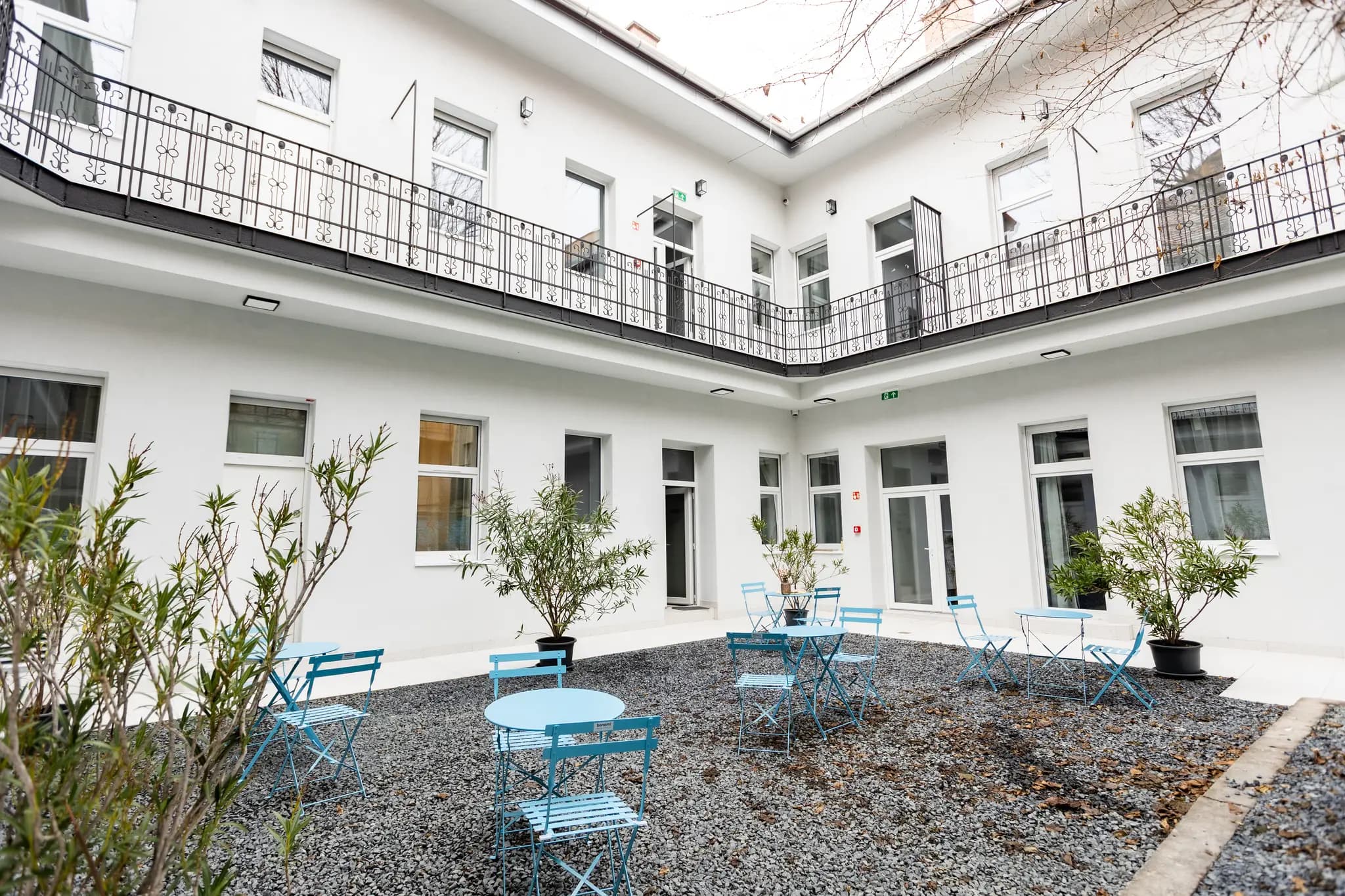
Tenant management
- Marketing through Fuse, Socials, universities and relocation partners
- Online booking, digital contracts, deposits and payments
- Move-in, a resident app and 24/7 support
- Community events and regular resident feedback
Maintenance management
- A dedicated property manager, employed by Fuse
- A 24/7 digital maintenance desk
- Cleaning, security and repair vendors held to service levels
- Condition inspections, capex planning and furniture renewal
Financial management
- Rent invoicing, collection and arrears
- Running costs kept to an agreed budget
- A monthly operating report and KPI dashboard
- A quarterly financial report, the annual budget and forecast
Full transparency. You see how your building performs, with regular reporting on occupancy, income and costs.
Three ways to work with us.
The same Fuse operation under three commercial models. You choose how much risk to keep and how much upside to share.
Master lease
Fixed incomeFuse leases the whole building at a fixed rent and runs it on its own account. Your income is set in the lease, whatever the occupancy.
- You receive
- A fixed rent
- Risk
- Carried by Fuse
- Upside
- Stays with Fuse
- Best for
- Predictable income and a lease your bank recognises
Hybrid structure
A floor plus upsideA fixed rent below the master-lease level, plus a share of the operating margin above an agreed threshold. It can also be set up as a PMA in which Fuse guarantees a revenue floor.
- You receive
- Fixed base plus a yearly share
- Risk
- Shared; Fuse guarantees the floor
- Upside
- Shared
- Best for
- First conversions and an uncertain ramp-up
PMA
Highest expected returnFuse runs the building in your name. All income flows into your operating account, and Fuse is compensated for performance: its fee rises and falls with the building's results.
- You receive
- All income after running costs and the fee
- Risk
- Yours; our fee moves with performance
- Upside
- Yours
- Best for
- The full return, if you can fund the refit
In every model: the full Fuse operation, a 5 to 10 year term, and you keep the asset.
Show the numbers
| Year | PMA | Hybrid | Master lease |
|---|---|---|---|
| 1 | €210k (€176k to €221k) | €165k (€134k to €178k) | €155k (€154k to €156k) |
| 2 | €228k (€189k to €241k) | €187k (€151k to €202k) | €157k (€156k to €158k) |
| 3 | €234k (€190k to €251k) | €193k (€153k to €211k) | €159k (€159k to €161k) |
| 4 | €239k (€190k to €261k) | €198k (€155k to €220k) | €162k (€161k to €164k) |
| 5 | €244k (€191k to €272k) | €204k (€157k to €230k) | €165k (€164k to €167k) |
| 6 | €250k (€191k to €283k) | €210k (€158k to €240k) | €168k (€167k to €170k) |
| 7 | €255k (€191k to €294k) | €216k (€160k to €251k) | €171k (€170k to €173k) |
| 8 | €261k (€191k to €306k) | €222k (€162k to €261k) | €174k (€172k to €177k) |
| 9 | €267k (€191k to €318k) | €229k (€164k to €273k) | €177k (€175k to €180k) |
| 10 | €272k (€190k to €331k) | €235k (€166k to €285k) | €180k (€178k to €183k) |
From first call to first residents.
Four steps, timed so your building opens for the September or February intake.
- Within 10 working days
Assessment
- You send floor plans, the current use and running costs
- We map demand, benchmark rents and test-fit the layout
- You get rents by room type, a capex range and your income under each model
OutcomeA financial case for your building
- Weeks 3 to 6
Terms and signing
- Layout and FF&E standard agreed together
- A term sheet for the model you choose
- A live owner model you can test yourself
OutcomeA signed agreement
- 2 to 9 months, by size and scope
Mobilisation
- Our support through the reconstruction and fit-out, with clear standards and consulting
- Vendors, systems and staff in place
- Marketing and pre-letting, with handover a month before the semester
OutcomeFurnished, staffed and pre-let
- For the 5 to 10 year term
Operations
- Letting, maintenance, finance and community, day to day
- Pricing and performance reviewed through the year
- Monthly and quarterly reporting to you
OutcomeStable occupancy and income
Read more for owners


Tell us about your building.
Send us the city, a rough size and what you want from the building. Floor plans help us come back with numbers sooner.
Karolis ŠarūnasHead of Expansionkarolis@fusestays.com