Can International Students Work Part-Time in Budapest?
Yes. Non-EU students with a Hungarian study permit can work up to 30 hours a week in term and full time for up to 90 days a year outside term (OIF, 2026). EU students need no permit.
Yes. As of October 2026, international students from outside the EU who hold a Hungarian residence permit for studies can work up to 30 hours a week during term and full time for up to 90 days a year outside term, according to Hungary's immigration office (OIF). EU, EEA and Swiss students do not need a permit to work in Hungary. Hungary's minimum wage in 2026 is 322,800 HUF a month for full time work, or 1,856 HUF an hour, set by Government Decree 426/2025.
How many hours can international students work in Budapest?
Students from outside the EU with a Hungarian residence permit for studies can work up to 30 hours a week during term, according to OIF, and do not need a separate work permit for that. Outside term, they can work full time for up to 90 days a year; BME's international students' guide puts this at up to 40 hours a week, for at most 66 working days. To work more than these limits in Budapest, BME's guide suggests asking your employer about a work permit.
| Period | Non-EU students with a study permit | EU, EEA and Swiss students | Source |
|---|---|---|---|
| During term | Up to 30 hours a week | No limit from immigration rules | OIF |
| Outside term | Full time (up to 40 hours a week) for up to 90 days a year (66 working days) | No limit from immigration rules | OIF, BME |
The right to work in Hungary comes with the study permit, so it lasts only while the permit is valid and you are enrolled. Your university must tell the immigration office within 8 working days if you start, finish or interrupt your studies, according to OIF. Confirm your own conditions with your university's international office in Budapest, since individual permits can differ.
What documents do I need to work in Budapest?
To work legally in Budapest you need three things: a valid residence permit for study (if you are from outside the EU), a TAJ number and a Hungarian tax ID.
- A residence permit for study purposes, covered in our Hungary student visa and residence permit guide
- A TAJ number (Hungary's social security number): BME's guide says it is necessary to be legally employed in Hungary
- A tax ID number (adóazonosító jel) from NAV, the Hungarian tax authority, which you apply for with your passport
Sort these early in Budapest, because most employers ask for them before they can put you on payroll. Many employers also pay salary into a Hungarian account; our guide on how to open a bank account in Budapest explains that step.
Where do international students find part-time jobs in Budapest?
Start with your university's career centre in Budapest, which often posts campus and partner roles first. BME's international students' guide also lists LinkedIn, Profession.hu (a large Hungarian job board), Zyntern, and two student cooperatives (iskolaszövetkezet) with English speaking jobs: Schönherz, which has a page of jobs for foreign students, and MŰISZ. General platforms such as Indeed and Glassdoor also carry Budapest listings, though you need to filter more to find English friendly roles.
Student cooperatives are how many Hungarian students find shift work in Budapest. Ask each cooperative whether it takes members on your type of permit before you apply.
What part-time jobs can I get in Budapest without speaking Hungarian?
Hospitality (restaurants, cafés and bars) is the most common starting point in Budapest for students without fluent Hungarian, and tips and flexible shifts both help. Retail and tourism roles are common in the central districts, where English is expected. Tutoring, especially in English or your native language, is a good option if you would rather not do shift work. Tech and customer support roles exist for students with the right skills, but they are more competitive and often ask for some Hungarian or a specific technical background.
How much do part-time jobs pay in Budapest?
No Budapest employer can pay below Hungary's legal minimum wage, which from 1 January 2026 is 322,800 HUF a month for full time work, or 1,856 HUF an hour, according to Government Decree 426/2025. Jobs that need at least secondary education have a higher floor, the guaranteed wage minimum, of 373,200 HUF a month or 2,145 HUF an hour. Euro amounts below use the ECB reference rate of 367.48 HUF to the euro on 27 October 2026.
| Hungarian wage floor, 2026 | Monthly, full time (HUF) | Hourly (HUF) | Hourly (about €) | Source |
|---|---|---|---|---|
| Minimum wage | 322,800 (about €878) | 1,856 | €5.05 | Decree 426/2025 |
| Guaranteed wage minimum (jobs needing secondary education) | 373,200 (about €1,016) | 2,145 | €5.84 | Decree 426/2025 |
These are gross amounts before tax and contributions. Actual pay in Budapest varies by role and by how much Hungarian you speak: hospitality and retail tend to sit near the lower end, and tutoring and specialised roles higher. Check current listings on the job boards above for your type of role.
How many hours should I work alongside my studies in Budapest?
The 30 hour weekly limit in Budapest is a legal ceiling, not a target. Many students with a full course load find that fewer hours are more realistic, enough to help with living costs without eating into study time. Be honest with yourself about this before you agree a fixed weekly schedule with an employer.
How does all-inclusive housing help a working student in Budapest?
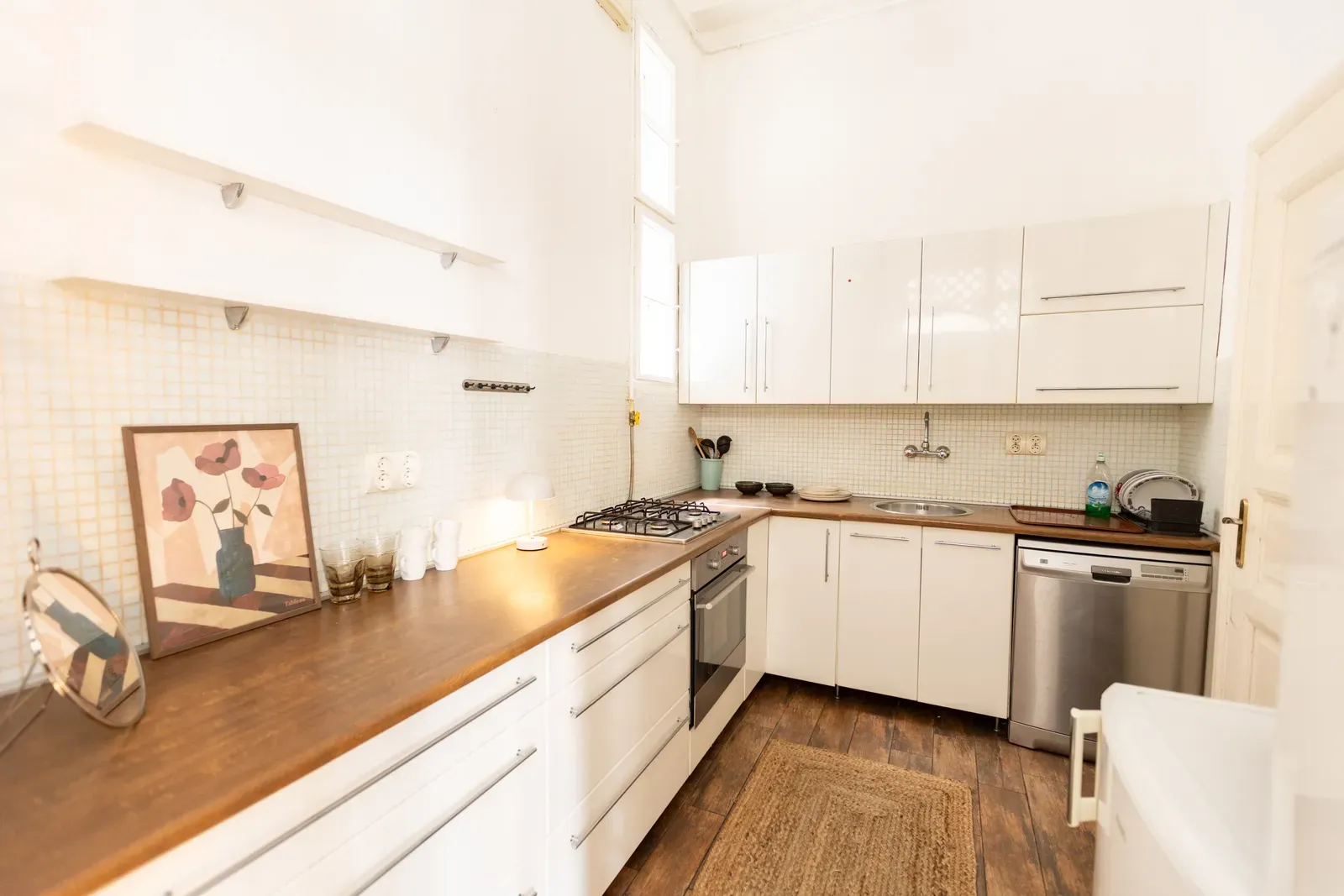
A fixed housing cost makes a student budget in Budapest simpler when your income comes from shifts. At Fuse (fusestays.com), the monthly price in Budapest covers rent, utilities (electricity, water and heating) and Wi-Fi in one figure, with a fair use rule: if the utilities of your room or flat go above €70 in a month, the extra can be charged (Gát utca 19 has its own allowance of 150 kWh of electricity and 5 m³ of water a month). Every room and its price is on the student housing in Budapest page.
Frequently Asked Questions
Sources
Every figure in this article comes from these pages.
- OIF (Hungarian immigration office): residence permit for the purpose of study
- OIF: information for higher education institutions
- Nemzeti Jogszabálytár: Government Decree 426/2025 (XII. 23.) on the 2026 minimum wage
- ECB: euro reference exchange rate for the Hungarian forint
- BME International Mentor Team: student jobs and work regulations
- BME International Mentor Team: TAJ card
- BME International Mentor Team: tax ID
- Schönherz Iskolaszövetkezet: jobs for foreign students in Budapest
- MŰISZ Student's Cooperative: student works