What Should I Pack for Winter in Riga as a Student?
Riga averages -2.2°C in January and February. Pack a warm waterproof coat, thermal layers, boots with grip, a hat and gloves, and leave bedding at home.

Pack for a long, cold winter: Riga averages -2.2°C in both January and February, and every month from December to February stays below zero on average. These are monthly averages for 1989 to 2018 from Latvia's building climate standard LBN 003-19, which uses data from the Latvian Environment, Geology and Meteorology Centre. A warm waterproof coat, thermal layers, boots with grip, a hat and gloves cover most of what a student needs.
At a glance
- Coldest months: January and February, -2.2°C on average (1989 to 2018)
- Below zero on average: December to February
- Heating season: 192 days a year in Riga
- Most useful item: waterproof winter boots with a grippy sole
- Leave at home: bedding and household items, if your room is furnished
How cold is Riga in winter?
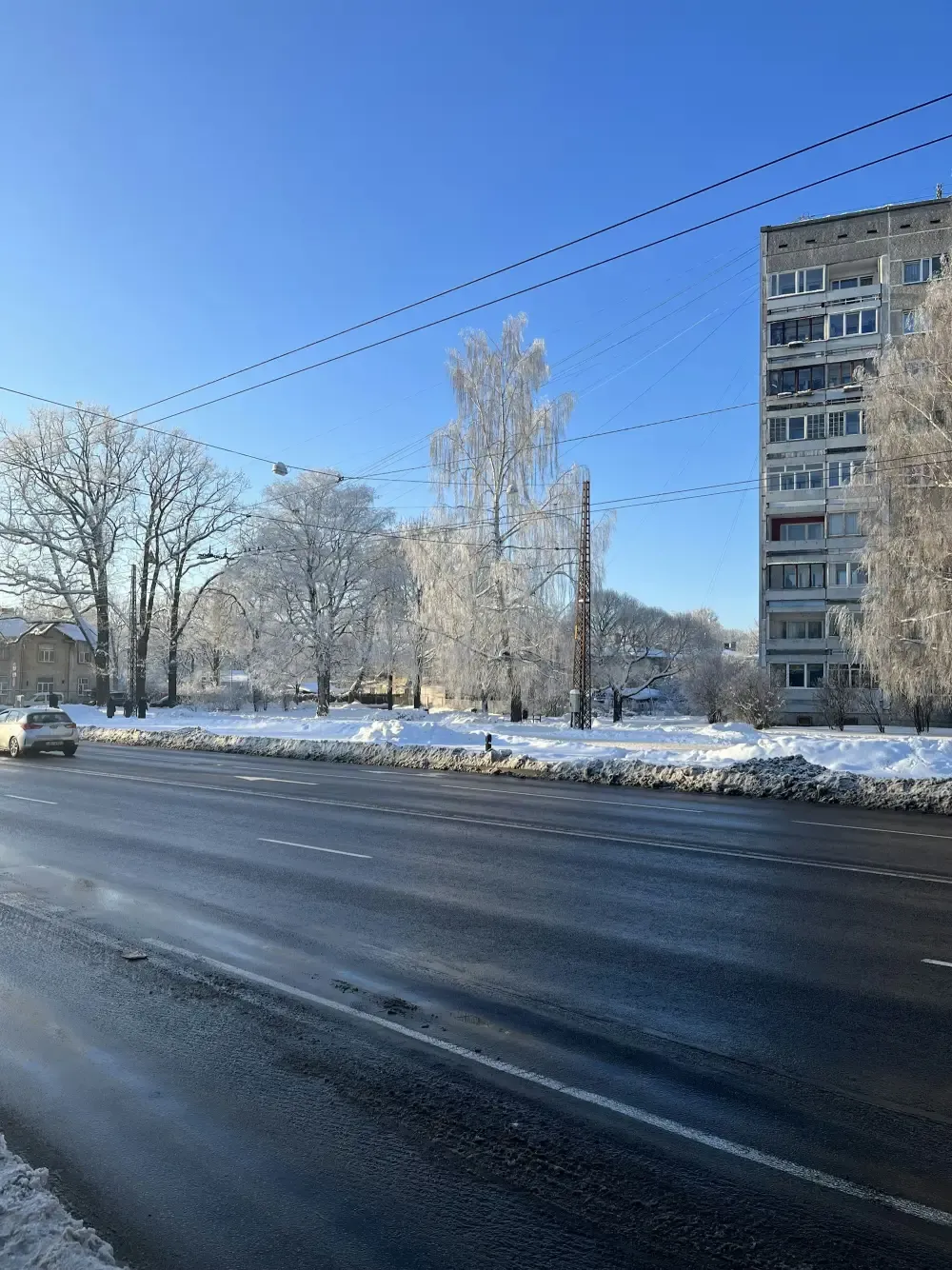
Riga's cold season runs from about November to March, and January and February are the coldest months at an average of -2.2°C each. These are averages over day and night for 1989 to 2018, set out in Latvia's building climate standard LBN 003-19 (Cabinet of Ministers Regulation No. 432 of 17 September 2019). Single days in Riga can be much colder than the average, so plan for days well below zero.
| Month in Riga | Average air temperature | Period | Source |
|---|---|---|---|
| November | 2.6°C | 1989 to 2018 | LBN 003-19 |
| December | -0.8°C | 1989 to 2018 | LBN 003-19 |
| January | -2.2°C | 1989 to 2018 | LBN 003-19 |
| February | -2.2°C | 1989 to 2018 | LBN 003-19 |
| March | 1.2°C | 1989 to 2018 | LBN 003-19 |
What winter clothes do I need for Riga?
A student who arrives in Riga for the spring semester needs clothes for temperatures around and below freezing for at least three months. Layers work better than one very thick jacket, because most indoor spaces in Riga are heated and you take layers off indoors.
| What to pack for Riga | Why you need it |
|---|---|
| A warm, waterproof coat that covers your hips | Snow, wind and wet sleet from December to February |
| Two or three thermal base layers, tops and leggings | Warmth under jeans and jumpers on days below zero |
| Jumpers or fleeces | Layers you can take off indoors |
| Waterproof winter boots with a grippy sole | Snow, slush and icy pavements |
| A hat that covers your ears, a scarf and gloves | Wind chill on bridges and by the river |
| Thick wool or thermal socks | Warm feet on long walks and at tram stops |
If you are short on luggage space, wear your coat and boots on the plane and buy extra jumpers and socks in Riga after you arrive.
What can I leave at home when moving to Riga?
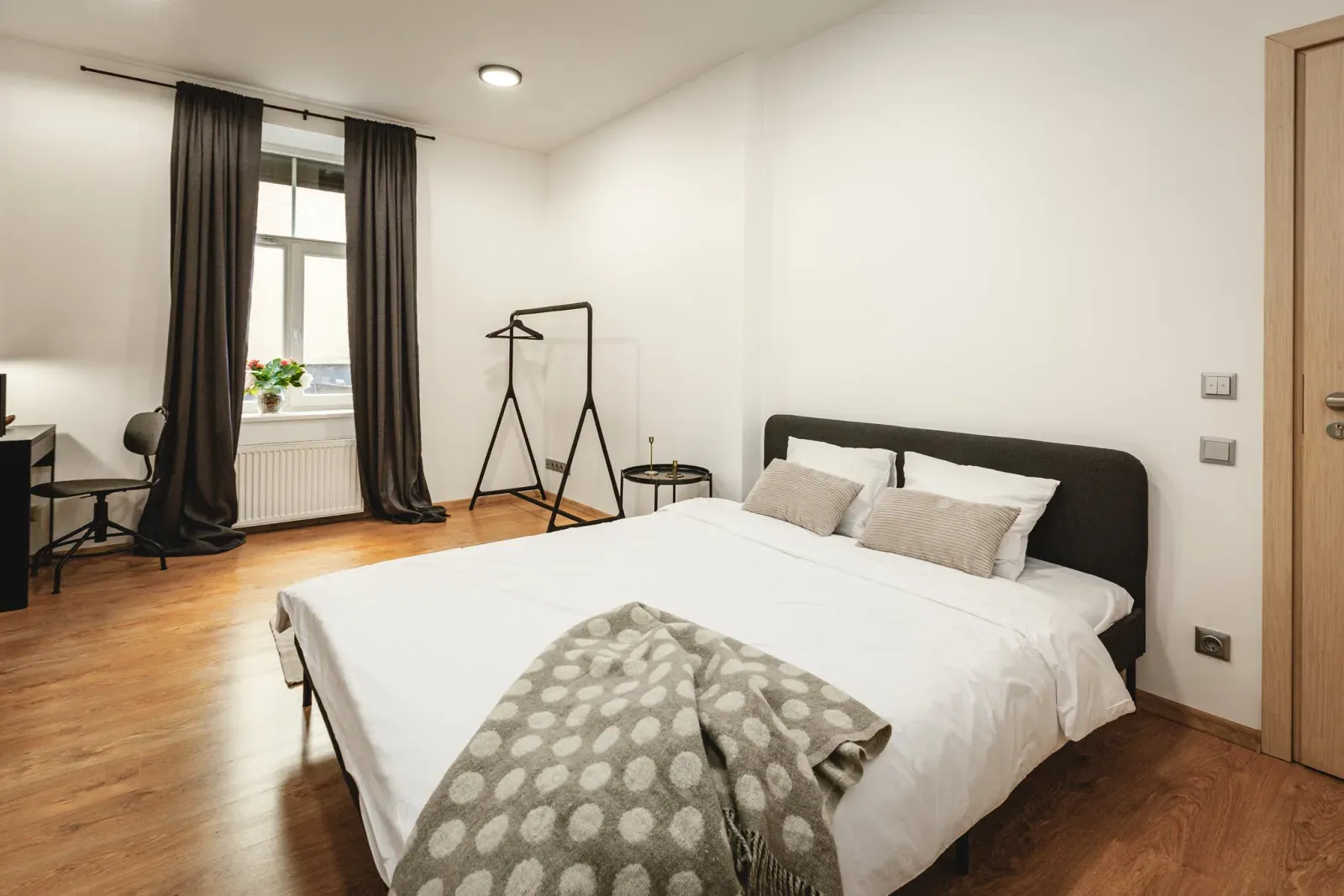
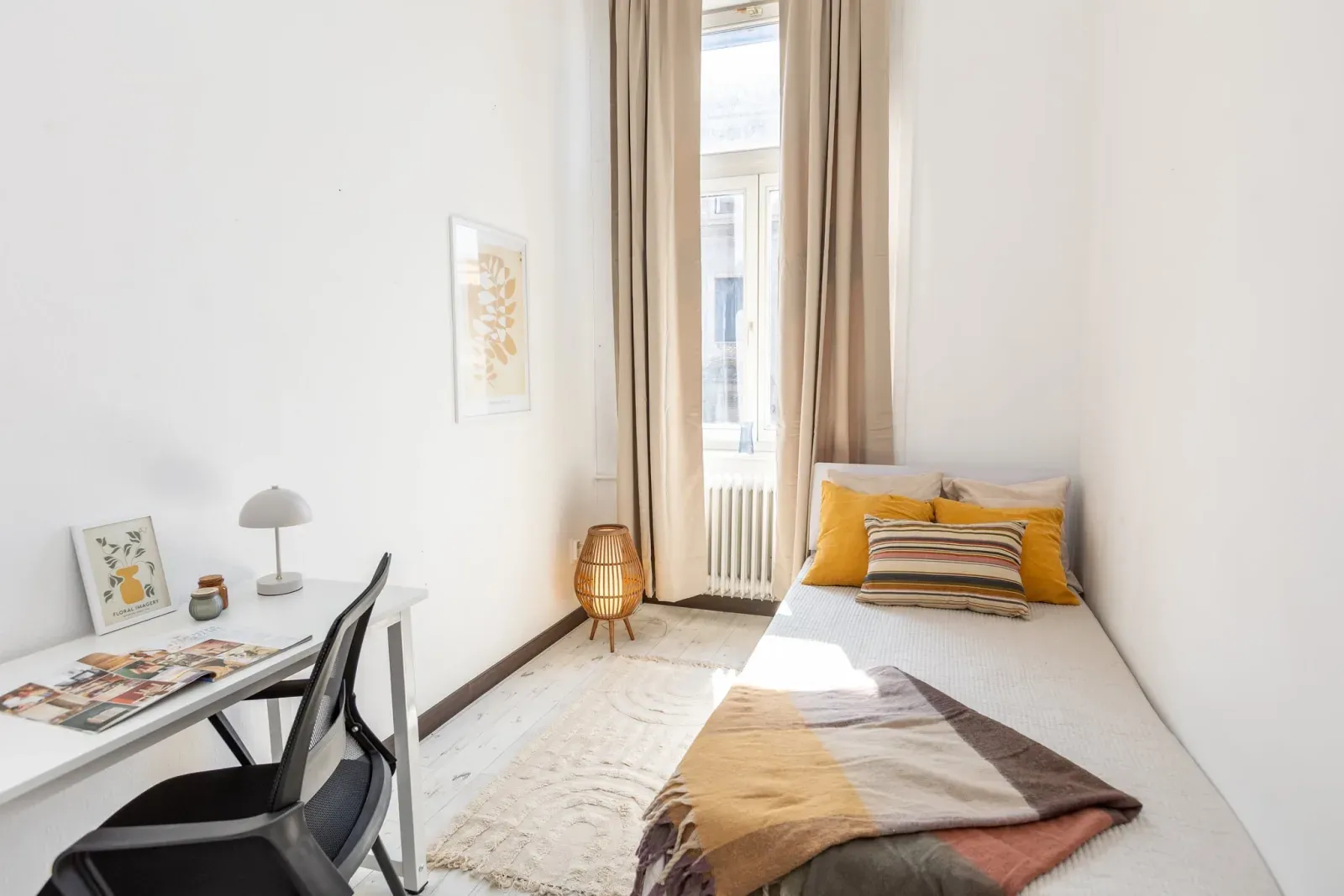
You can leave bedding, bulky household items and furniture at home if you move into a furnished room in Riga. At Fuse, every room is furnished, a linen set is ready when you check in and WiFi is included, so your suitcase can go to clothes and personal items. Bring one towel and your toiletries for the first night; a hot water bottle or a desk lamp are easy to buy in Riga after you arrive.
Will my room in Riga be warm in winter?
Buildings in Riga are heated for a large part of the year: Latvia's building climate standard counts a heating period of 192 days a year in Riga, with an average outdoor temperature of 1.1°C during that period. Heating is a real cost in a Riga winter, so check whether it is included in your rent or billed on top. In an all inclusive room, rent, electricity, water, heating and WiFi sit in one monthly price, so a cold month does not mean a bigger bill.
When should I arrive in Riga for the spring semester?
Most students who start the spring semester in Riga arrive in January or February, the two coldest months of the year at -2.2°C on average. Arriving a few days before classes gives you time to buy anything you forgot and to learn the route to your university. Our guide on when to move to Riga for the spring 2027 semester has the start dates by university.
Where does Fuse fit?
Fuse (fusestays.com) offers furnished student rooms and coliving in Riga with one all inclusive monthly price: rent, electricity, water, heating and WiFi. A linen set is ready when you check in, so you do not need to pack bedding. Contracts run for 5, 6 or 12 months and start on the 1st or the 15th of a month, and rooms that start in February 2027 can also take 4 months, which fits a spring semester. You book online; see every room and its current price on the student housing in Riga page.
Frequently asked questions
Sources
Every figure in this article comes from these pages.