Master Lease or Management Agreement? Student Housing in Budapest
A master lease gives a Budapest owner fixed rent and no void risk. A management agreement keeps the income and the upside with the owner. How each works with Fuse.
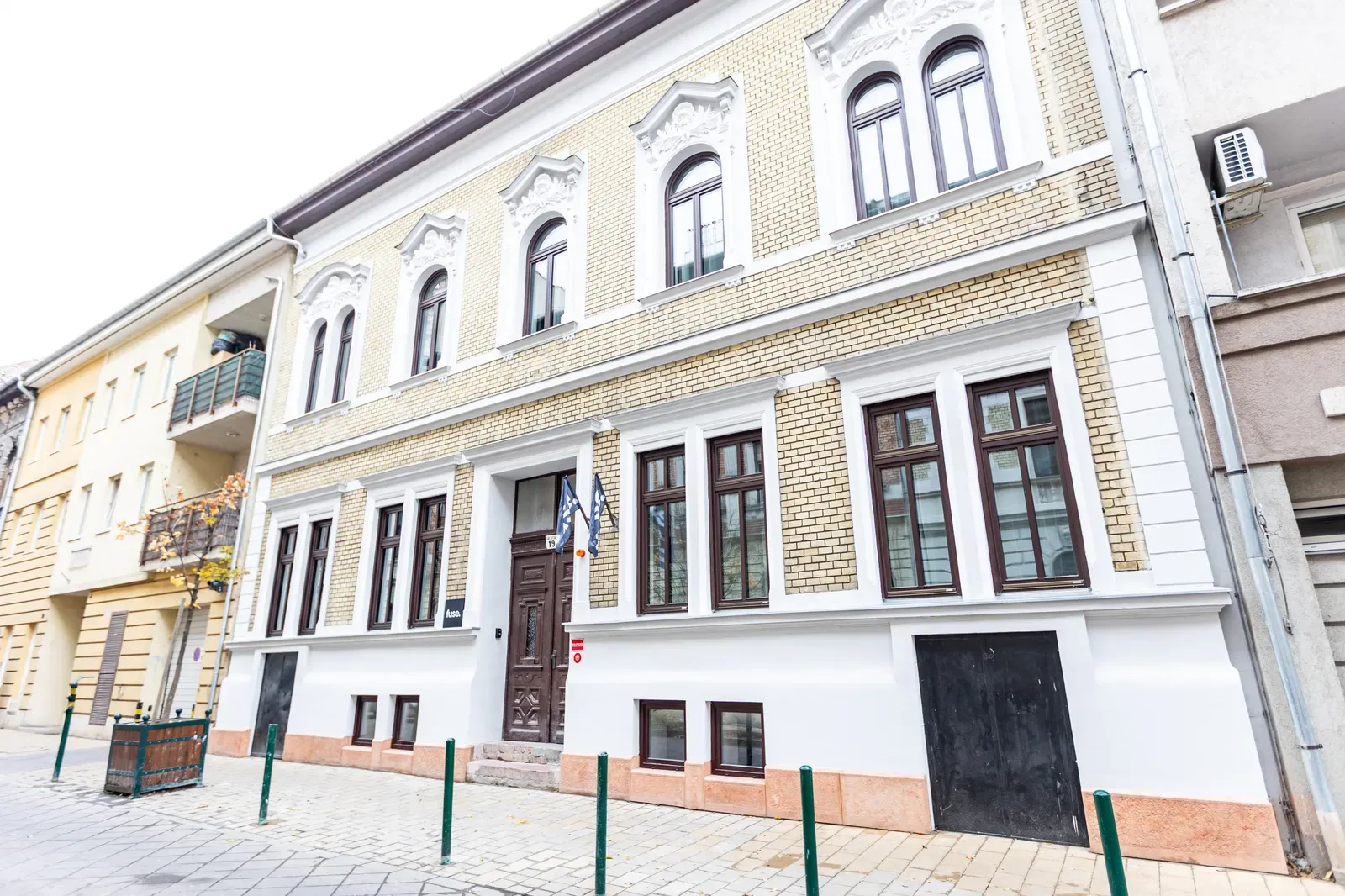
A building owner in Budapest can work with a student housing operator in two main ways: a master lease, which pays a fixed rent whether rooms are full or empty, or a management agreement, which keeps the income, the risk and the upside with the owner. As of October 2026, Fuse (fusestays.com) uses both structures and operates 17 locations in Budapest for more than a dozen separate owners, with more than €15 million of property under management.
This post explains how a master lease and a management agreement for a Budapest student building each work, who each suits and what the first six months look like either way.
What is a master lease for a Budapest student building?
Under a master lease, Fuse leases the whole Budapest property from the owner for a fixed term and pays an agreed rent every month, whether the rooms are full or empty. Fuse then lets the rooms to students in its own name.
Under a master lease, the Budapest owner gets one tenant instead of forty, one payment a month on a fixed date, no exposure to empty rooms, no student administration and no late-night calls about a broken boiler. For an owner who wants the building to behave like a bond rather than a business, the master lease is the structure.
Under a master lease, the Budapest owner gives up the upside. If the building performs better than expected, the difference stays with Fuse, because Fuse also carries the downside.
Before signing a master lease, Fuse needs conviction on the Budapest building, because Fuse carries the void risk. The district, the floor plan and the condition all have to work, and the term is usually longer so the fit-out can be recovered.
A master lease suits Budapest owners who want predictability, owners who are not in Hungary, owners for whom a contracted income line is worth more than an uncertain higher one, and owners who have tried letting the building themselves.
What is a management agreement for a Budapest student building?
Under a management agreement, the Budapest building stays the owner's business. Fuse runs it on the owner's behalf: letting, tenant relationships, day-to-day management, maintenance coordination and reporting. The rental income belongs to the owner, and Fuse is paid a management fee.
Under a management agreement, the Budapest owner gets the upside. If the building fills faster and at better rates than expected, that flows to the owner, who also sees the real performance of the asset.
Under a management agreement, the Budapest owner carries the void risk and the variation, so a slow letting season is felt by the owner.
Before signing a management agreement, Fuse needs agreement upfront on how the Budapest building is presented, maintained and let, and on what Fuse may spend without asking, because the owner's name is on the income and Fuse's is on the door.
A management agreement suits Budapest owners who understand student housing and want exposure to it, developers holding a finished building, and owners preparing a sale, where a well-run building with clean reporting is worth more.
How do a master lease and a management agreement compare?
A master lease and a management agreement for a Budapest student building differ on who carries the risk, who keeps the upside and how much of the owner's time the building takes.
| Point | Master lease | Management agreement |
|---|---|---|
| Income to the owner | Fixed rent, paid whatever the occupancy | Actual income, less Fuse's fee |
| Void risk | Fuse | Owner |
| Upside | Fuse | Owner |
| Owner's time | Close to none | Periodic reports and decisions, no day-to-day work |
| Fit-out and furniture | Usually arranged with Fuse and recovered over the term | Usually paid by the owner, specified with Fuse |
| Term | Longer | Shorter and more flexible |
| Reporting | Building condition and compliance | Occupancy, revenue, cost and maintenance |
What happens in the first six months?
The first six months with a Budapest student building follow the same order under a master lease or a management agreement. The structure changes who carries what, not the steps.
| Weeks | Stage | What happens |
|---|---|---|
| 1 to 3 | Assessment | Fuse visits and runs its checklist: district, floor plan, services, owners' association and licences. Many buildings stop here, at no cost to the owner. |
| 3 to 6 | Structure and terms | Lease or management, term, fit-out scope, who pays for it, rent or fee, then documents. |
| 6 to 14 | Works and fit-out | Layout changes if any, cosmetic works, furniture, internet, keys, safety and compliance sign-offs. |
| 10 onward | Letting | Rooms go live to Fuse's student community, Socials and university partners. |
| From handover | Operation | Move-ins, tenant relationships, maintenance, rent collection and reporting. |
Fuse fills its Budapest rooms through its own student community, through Socials, the student platform that reaches over a million students a year, and through university partnerships including Corvinus University of Budapest, the Budapest University of Technology and Economics (BME), International Business School (IBS) and Eötvös Loránd University (ELTE). Students book Fuse rooms in Budapest on 5, 6 or 12 month contracts, starting on the 1st or the 15th of a month; 12 months has the lowest monthly rate.
Fuse maintenance is handled by people: half of Fuse maintenance requests are closed within two days and 90 percent within a week (Fuse records, requests logged from June 2026).
Timing against the student year matters more than any of the six-month steps. The main letting window in Budapest runs from spring into August, with a smaller one in January, so a Budapest building that is ready in June is in a much better position than one ready in October.
How should a Budapest owner decide?
The deciding question for a Budapest owner choosing between a master lease and a management agreement is usually not a financial model. It is whether the building should be an income line or an asset you are actively invested in.
If the Budapest building is an income line, a master lease fits: predictability is what you are buying, and paying for it with the upside is a rational trade.
If you want exposure to Budapest student housing, a management agreement fits. Budapest has 17,296 dormitory places (Eduline, 7 August 2026) against an estimated shortfall of about 34,000 (Helló Magyar, 18 August 2026), and about 44,000 international students studied full time in Hungary in 2025 (KSH data reported by Eduline, 1 June 2026).
If a Budapest owner is unsure, the Fuse assessment is the same under either structure, and the structure is easier to choose once both sides know what the building yields. The market numbers are set out in Student Housing Investment in Budapest: The 2026 Numbers, and the assessment is described in How to Convert a Budapest Building into Student Housing.
Where does Fuse fit for Budapest building owners?
Fuse has grown from zero to 17 locations in central Budapest since June 2024, all in buildings other people own. Students see every Fuse room and its price on the Fuse student housing in Budapest page. If you have a building in Budapest and no idea who to call, start with the Fuse page for property owners.
Frequently Asked Questions
Sources
Every figure in this article comes from these pages, checked on October 28, 2026.
- Eduline: dormitory places and prices in Hungarian higher education, 7 August 2026
- Helló Magyar: Budapest Diákváros and the dormitory shortfall, 18 August 2026
- Eduline: international students at Hungarian universities (KSH data), 1 June 2026
- Fuse: student housing in Budapest (17 addresses in districts V to IX)