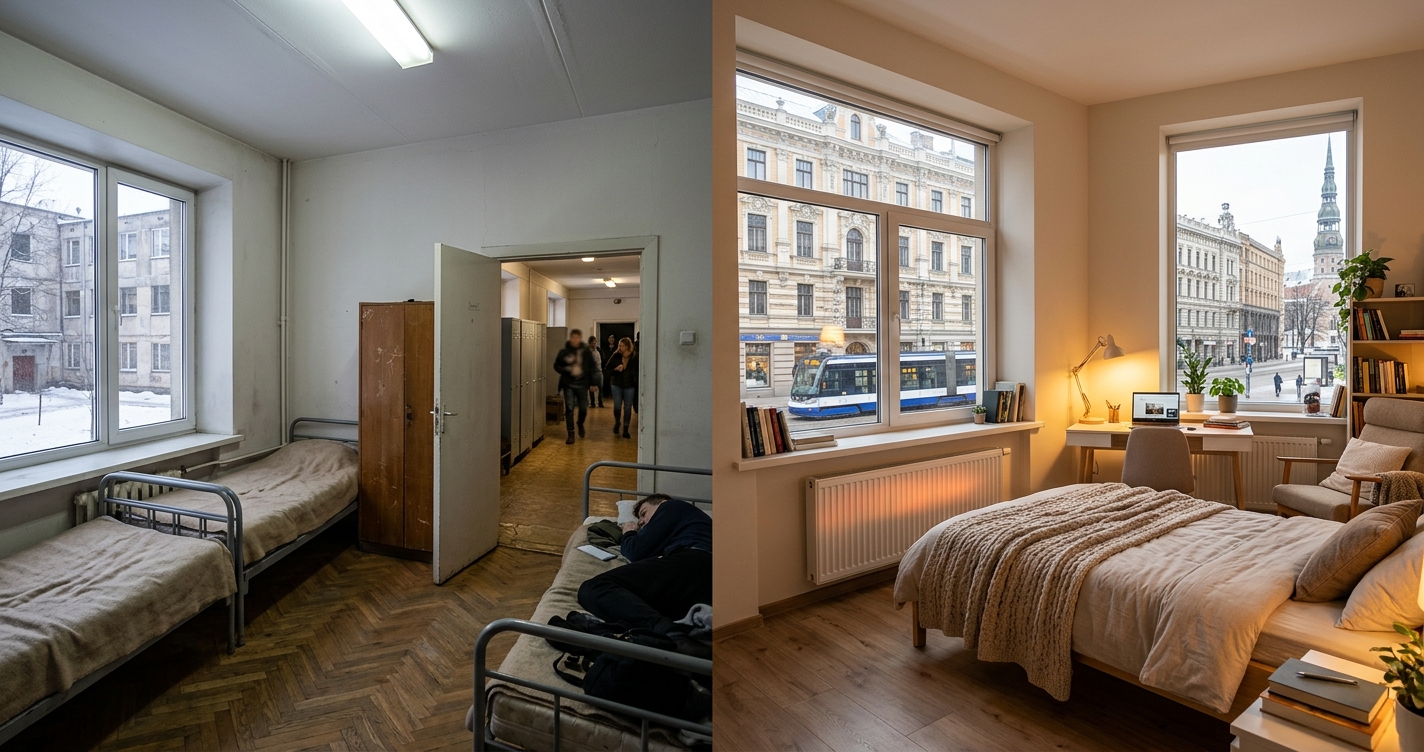
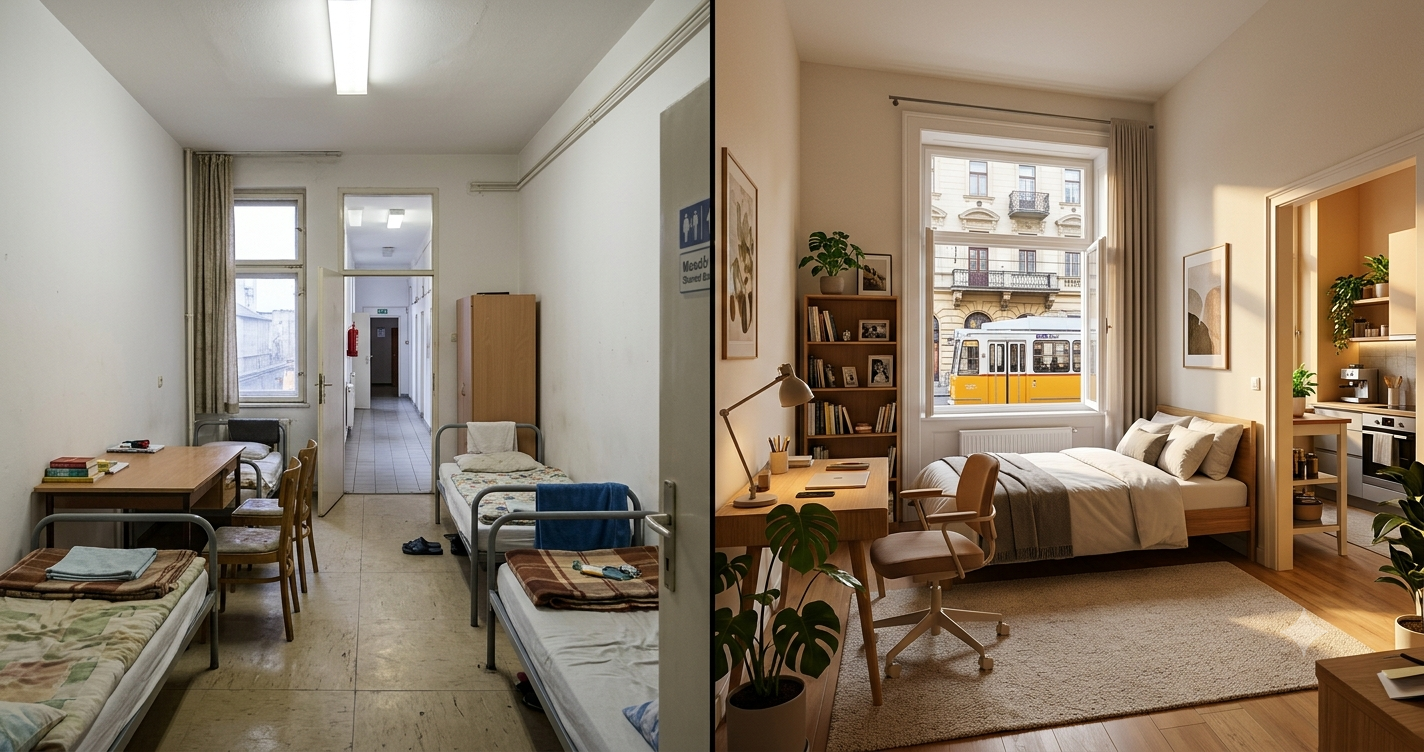
5, 6, 10 or 12 Months: Which Fuse Contract Fits Your Semester?
Fuse offers fixed-term contracts of 5, 6, 10 or 12 months. How the monthly price changes with length, and how to pick the right one for one semester or a full year.

One of the more annoying parts of student housing in Europe is that most private landlords only really offer one option: twelve months, take it or leave it. If you're doing a single semester abroad, that's six months of rent you're paying for a room you're not living in. If you're not sure exactly how long you'll be staying, it's a commitment you have to make anyway, often before you've even seen the place in person.
The short answer: choose 5 or 6 months for one semester, 10 months for an academic year with the summer at home, and 12 months for a full year or a whole degree. At Fuse the 12 month contract has the lowest monthly rate and shorter contracts cost more per month, so compare the total for the months you actually need.
Fuse works differently. Every room comes with a choice of fixed-term contracts: 5, 6, 10 or 12 months, with rent paid monthly throughout. The idea is simple: your housing should match how long you're actually going to be there, not the other way around.
Here's how to figure out which one is right for you.
The Four Contract Lengths, and Who Each One Is For
Whichever length you pick, a Fuse contract starts on the 1st or the 15th of a month, so you can line it up with your semester rather than the calendar. 5 months is the minimum stay.
5 months is built for a single semester. If you're doing one term of Erasmus or an exchange programme that runs roughly September to January or February to June, this is usually the closest match to your actual dates without paying for weeks you don't need.
6 months covers the same situation with a bit more breathing room. Semesters don't always line up perfectly with calendar months, and a lot of students want a few extra weeks at the start to settle in before classes begin, or a bit of slack at the end to travel before flying home. If you're not 100% sure your semester will wrap exactly on schedule, 6 months is the safer call.
10 months is for students doing a full academic year but not quite the full twelve, common for programmes that run September through June with summer back home. It's also a solid fit if you're doing two consecutive semesters and want one contract instead of two separate bookings.
12 months is for students settling in for the long haul: full-degree students, master's students staying through the summer for research or internships, or anyone who knows they're not leaving the city anytime soon. It's also the contract length with the lowest monthly rate: at Fuse, 12 months carries the base rate.
How Pricing Actually Works Across Contract Lengths
At Fuse, the 12 month contract carries the base (lowest) rate, and the same room costs more per month on 10, 6 or 5 months. Fuse rooms start at €380 a month in Budapest and €250 in Riga on a 12 month contract, and every room page shows the exact monthly price for each length before you book. Utilities and WiFi are included at every length (in Budapest a fair use limit applies to utilities).
To compare, work out the total: the monthly price times the months you'll actually live there. Then add the €295 membership fee, paid once. The deposit (2 times the base monthly rent in Budapest, 1.5 times in Riga) comes back within 30 days of move-out, minus any deductions, so it isn't a cost unless something is deducted.
As a general rule across the student housing market, and Fuse is no exception, longer contracts tend to come with a better monthly rate than shorter ones. A 5 month stay and a 12 month stay in the same room won't usually cost the same per month, because the operator is taking on more turnover risk with a shorter booking.
This doesn't mean the 5 month option is a bad deal. It means you should do the actual math rather than assuming the shorter contract is automatically cheaper just because the total is lower. A 5 month contract at a slightly higher monthly rate can still come out well below a 12 month contract's total cost, simply because you're paying for less time. The reverse is also true: if you only need 5 months but you're eyeing a 12 month rate, that lower monthly figure doesn't help if you're paying for 7 months you won't be living there.
Check current pricing for your specific room and city on the Fuse listings page, since exact rates vary by location, room type and season.
What You're Actually Choosing Between: Flatshare, Coliving or Private Apartment
Contract length is one decision. Living style is the other, and they're independent of each other. Fuse offers three:
Flatshare puts you in a smaller setup with 4 to 7 housemates, your own private bedroom, and shared kitchen and sometimes living room. A good middle ground if you want some social contact without a big shared environment.
Coliving is the most community-focused option, with 7 to 15 housemates, your own private bedroom (sometimes with a private bathroom), and a wider set of shared spaces: a kitchen, a lounge and, depending on the building, extras like a gym, a games room or a laundry. Gát utca 19 in Budapest, for example, has an inner garden, a lounge, a shared diner, a games room, a study area and a laundry room. If meeting people and having a built-in social life matters to you, this is the option designed around that.
Private apartment is for students who want their own space entirely, 1 to 2 people, fully private, minimal or optional shared areas. The trade-off is less community by design, but full independence.
All three come with the same all-inclusive pricing (utilities and WiFi bundled into rent) and the same contract length options. So the real decision tree is: figure out how long you're staying first, then pick the living style that matches how social you want your day-to-day to be.
What Happens If Your Plans Change
This is worth being straightforward about. A fixed-term contract is exactly that: fixed. Once you've signed for 5, 6, 10 or 12 months, that's the commitment, regardless of how the rest of your semester plays out. A change in your study plans or a decision to leave early doesn't void the contract: rent remains payable until the end of your contract even if you move out earlier. To leave early, Fuse's FAQ sets the notice per city: in Budapest, at least 90 days' written notice and an early termination fee equal to one month's rent; in Riga, at least 2 months' written notice. Two rules do help. There is a 7 day cooling-off period after signing, in which your deposit and any rent you've paid are refunded in full (the €295 membership fee is not). And if a visa denial stops you from moving in and you send the documentation within 7 calendar days, the €295 fee becomes a credit valid for 12 months. To stay longer, ask for an extension at least 30 days before your contract ends.
This isn't unique to Fuse. It's how fixed-term housing contracts work generally, and it's exactly why choosing the right length at the start matters so much. Before you book, read your contract terms carefully and make sure you understand exactly what the cancellation and refund policy says. If anything is unclear, ask before you sign, not after.
How to Decide: A Quick Checklist
Before you book, run through this:
How long is your programme actually scheduled to run, start date to end date? Is there any realistic chance you extend, finish early, or your dates shift? Would you rather have a little buffer room at the start and end of your contract, or are you confident in your exact dates? Have you compared the total cost across contract lengths for the room you want, not just the monthly rate? Are you booking early enough that your preferred contract length is still available, since shorter contracts in particular get booked up fast for September and February starts?
Booking Is Simpler Than You'd Think
Once you've picked your contract length and living style, the process is genuinely quick. Browse rooms by city, move-in date and budget with up to date availability. Pick your dates and contract length, add your details, upload your ID and proof of your stay purpose, check your contract details, then pay the €295 membership fee to hold the room. Then you sign your tenancy agreement online, within 48 hours. Your deposit and first month's rent follow as two bank transfers, and once both are in, we email you how to collect your keys by the day before you move in.
No lengthy upfront application, no chasing a landlord for a reply that never comes.
See available rooms and contract options